
Looking to earn money while studying in the USA? You’re in the right place.
As an international student on an F-1 visa, finding high-paying part-time work isn’t just about covering expenses—it’s about gaining valuable experience, building your professional network, and reducing financial stress so you can focus on your education.
In 2026, international students can earn between $15 to $50 per hour in legitimate, visa-compliant positions. With 21 states raising their minimum wages this year and tech companies desperately seeking talent, opportunities have never been better.
But here’s the challenge: navigating F-1 visa work restrictions, understanding CPT vs OPT, and knowing which jobs actually pay well can be overwhelming. Make one mistake with your work authorization, and you risk jeopardizing your entire visa status.
In this comprehensive guide, you’ll discover:
✅ 15 highest-paying part-time jobs with exact 2026 salary ranges
✅ Updated F-1 work regulations and authorization requirements
✅ Step-by-step job search strategies that actually work
✅ State-by-state minimum wage data for smart decision-making
✅ Real student success stories and earnings breakdowns
✅ Common mistakes that could violate your visa (and how to avoid them)
MMS Global Services help Bangladeshi students navigate every aspect of studying in the USA—including maximizing your earning potential
Work Regulations for International Students
Before we dive into the job opportunities, it’s essential to understand that international students on F-1 visas can:
- Work up to 20 hourly wage per week during academic sessions
- Work full-time (40 hourly wage per week) during scheduled breaks
- Must obtain proper authorization for off-campus employment
- Need a valid Social Security Number (SSN) for employment
Before starting any employment, ensure you understand your visa obligations – F-1 visa requirements and regulations
Recent F-1 Employment Updates (2026)
While the core F-1 visa work rules remain stable, here’s what’s new in 2026:
Streamlined DSO Communication:
Many universities now use digital platforms for CPT/OPT approvals, reducing processing time to 3-5 business days.
Extended STEM OPT List:
USCIS added 12 new fields to the STEM OPT extension list, including certain data science and AI specializations.
Increased Minimum Salary Thresholds:
The H-1B minimum wage (relevant for post-graduation) increased, making student work experience even more valuable.
Stricter Compliance Monitoring:
Universities report increased scrutiny on work hour tracking. Keep detailed records.
Understanding Your Work Authorization Options
As an F-1 student, you have different pathways to work legally in the USA. Here’s what you need to know:
On-Campus Employment (Available from Day 1)
- Work up to 20 hours/week during semester
- Up to 40 hours during breaks
- No application required – just need job offer and SSN
- Examples: Library assistant, dining hall, residence hall desk
CPT: Curricular Practical Training
Curricular Practical Training (CPT) allows you to work off-campus in internships or jobs that are directly related to your field of study. Available after completing one academic year.
CPT Requirements:
- Must complete 1 full academic year (9 months)
- Job must be integral part of curriculum
- Requires DSO authorization on I-20
- Can be part-time (20 hrs/week) or full-time (40 hrs/week)
- No application fee
Best for: Summer internships, co-op programs, field placements
OPT: Optional Practical Training
Optional Practical Training (OPT) is temporary employment authorization for practical experience in your field of study. Can be used before or after graduation.
OPT Requirements:
- Available any time during/after your program
- Must apply to USCIS 90 days before graduation
- Requires EAD card ($410 fee)
- Processing takes 3-5 months
- 12 months standard (24-month STEM extension available)
Best for: Post-graduation employment, building career in USA
CPT vs OPT: Which Should You Choose?
| Factor | CPT | OPT |
|---|---|---|
| When Available | During program (after 1 year) | Before or after graduation |
| Application Location | Through university DSO | USCIS (Form I-765) |
| Processing Time | 5-10 days | 3-5 months |
| Cost | Free | $410 filing fee |
| Work Relationship | Must be integral to curriculum | Any job in your field |
| Duration | Per semester/year, no overall limit | 12 months (+ 24 for STEM) |
| Impact on OPT | 12+ months full-time CPT = no OPT | N/A |
| Employer Restrictions | Generally more flexible | Must be related to major |
| Authorization Document | I-20 with DSO endorsement | EAD card from USCIS |
💡 Pro Tip: Most students use CPT for internships during their program, then save their 12-month OPT for after graduation when they’re job hunting. However, using 12+ months of full-time CPT will make you ineligible for OPT, so plan carefully!
Which Authorization Do You Need?
Choose On-Campus Work if:
- You’re in your first year
- You want simple, no-paperwork employment
- You prefer working near classes
- You need flexible, reliable hours
Choose CPT if:
- You’ve completed 1 year of study
- You have an internship opportunity
- The work is required/recommended by your program
- You want to save OPT for after graduation
Choose OPT if:
- You’re graduating soon
- You want post-graduation work authorization
- You’re seeking full-time employment
- You want maximum flexibility in job choice
Remember, part-time employment income can help cover essential expenses like health insurance.
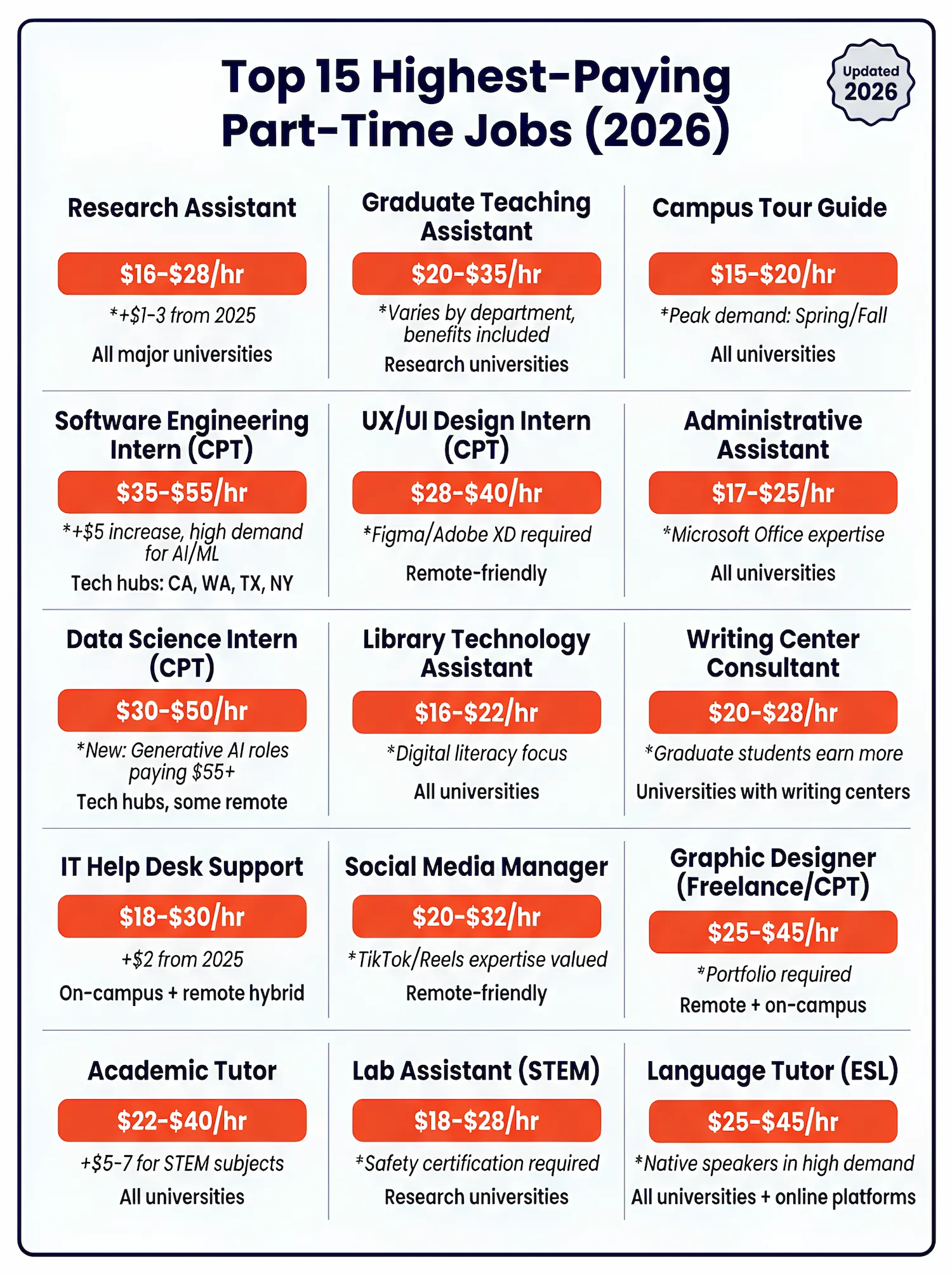
Top 15 Highest-Paying Part-Time Jobs (with Salary Data)
We’ve compiled a list of the top 8 highest-paying positions with average hourly rates, benefits, locations, and required skills. Whether you’re looking to boost your resume or earn extra income, these opportunities cater to various interests and expertise levels while adhering to F-1 visa regulations.
| Job Title | 2026 Pay Range | Key Updates | Location Availability |
|---|---|---|---|
| Research Assistant | $16-$28/hr | +$1-3 from 2025 | All major universities |
| Software Engineering Intern (CPT) | $35-$55/hr | +$5 increase, high demand for AI/ML | Tech hubs: CA, WA, TX, NY |
| Data Science Intern (CPT) | $30-$50/hr | New: Generative AI roles paying $55+ | Tech hubs, some remote |
| IT Help Desk Support | $18-$30/hr | +$2 from 2025 | On-campus + remote hybrid |
| Academic Tutor | $22-$40/hr | +$5-7 for STEM subjects | All universities |
| Graduate Teaching Assistant | $20-$35/hr | Varies by department, benefits included | Research universities |
| UX/UI Design Intern (CPT) | $28-$40/hr | Figma/Adobe XD required | Remote-friendly |
| Library Technology Assistant | $16-$22/hr | Digital literacy focus | All universities |
| Social Media Manager | $20-$32/hr | TikTok/Reels expertise valued | Remote-friendly |
| Lab Assistant (STEM) | $18-$28/hr | Safety certification required | Research universities |
| Campus Tour Guide | $15-$20/hr | Peak demand: Spring/Fall | All universities |
| Administrative Assistant | $17-$25/hr | Microsoft Office expertise | All universities |
| Writing Center Consultant | $20-$28/hr | Graduate students earn more | Universities with writing centers |
| Graphic Designer (Freelance/CPT) | $25-$45/hr | Portfolio required | Remote + on-campus |
| Language Tutor (ESL) | $25-$45/hr | Native speakers in high demand | All universities + online platforms |
Best Cities for High-Paying Student Jobs
Discover the top U.S. cities offering lucrative part-time work opportunities for international students. From tech hubs to academic centers, these locations combine high minimum wages with diverse job markets, making them ideal for maximizing your earning potential while studying abroad.
When choosing where to study in the USA, consider these cities known for their high minimum wages and abundant student job opportunities:
| State | 2026 Min Wage | Increase from 2025 | Best for Students | Notes |
|---|---|---|---|---|
| Washington | $17.13/hr | +$0.47 | ⭐⭐⭐⭐⭐ | Highest state minimum; Seattle $21.30 |
| California | $16.90/hr | +$0.50 | ⭐⭐⭐⭐⭐ | Many cities higher; West Hollywood $20.25 |
| Massachusetts | $16.00/hr | No change | ⭐⭐⭐⭐⭐ | Strong job market, many universities |
| Connecticut | $16.94/hr | +$0.94 | ⭐⭐⭐⭐ | Scheduled increases continue |
| New York | $17.00/hr (NYC) | +$1.00 | ⭐⭐⭐⭐⭐ | Varies by region; $16.00 upstate |
| Arizona | $15.15/hr | +$0.70 | ⭐⭐⭐⭐ | Lower cost of living |
| Colorado | $15.16/hr | +$0.52 | ⭐⭐⭐⭐ | Tech hub, good opportunities |
| New Jersey | $15.92/hr | +$0.56 | ⭐⭐⭐⭐ | Near NYC job market |
Your First Week Working Guide
Before Day One: Essential Paperwork
1. Social Security Number (SSN) Application
- Visit SSA office with: Job offer letter, I-20, passport, I-94, visa
- Timing: Apply after receiving job offer, before first paycheck
- Processing: 10-14 business days
- Cost: Free
2. Tax Forms Setup
- Form W-4: Determine withholding (most students: Single, 1 allowance)
- State tax forms if applicable
- Tip: Claim exempt status if applicable under tax treaty
3. University Work Authorization
- Get I-20 updated with employment info (on-campus jobs)
- CPT/OPT: Ensure authorization is active before start date
- Submit employment information to DSO
Day One Checklist
✅ Bring valid ID and SSN (or receipt)
✅ Complete I-9 (employment eligibility verification)
✅ Sign job offer/contract
✅ Set up direct deposit
✅ Review work schedule and policies
✅ Get employee handbook
✅ Take photos of all documents
Understanding Your Paycheck
Gross Pay: Your hourly rate × hours worked
Deductions: Federal tax (~10-12%), FICA taxes (7.65%*), State tax (varies)
Net Pay: What you actually receive
*Note: Some international students may be exempt from FICA for the first 5 years—consult with HR.
Visa Status at Risk: Mistakes You Should Avoid
1. Working Without Proper Authorization
❌ Mistake: Starting work before CPT/OPT approval or SSN receipt
✅ Solution: Wait for all approvals. If urgent, ask employer to delay start date.
⚠️ Risk: Visa termination, deportation, future visa denial
2. Exceeding 20 Hour Weekly Limit
❌ Mistake: Working 25-30 hours during semester “just this once”
✅ Solution: Track hours religiously. Use apps like Clockify or Toggl.
⚠️ Risk: Violates F-1 status; discovered during visa renewal
3. Working Off-Campus Without CPT/OPT
❌ Mistake: Accepting freelance gigs or remote work without authorization
✅ Solution: All work needs authorization—even unpaid internships
⚠️ Risk: Same as #1—severe consequences
4. Not Reporting Employment to DSO
❌ Mistake: Assuming DSO knows about your on-campus job
✅ Solution: Update DSO within 10 days of any employment change
⚠️ Risk: SEVIS record inaccuracy can cause visa issues
5. Incorrect Tax Filing
❌ Mistake: Using wrong tax forms (1040 instead of 1040-NR)
✅ Solution: Consult international student tax advisor; use Sprintax or Glacier
⚠️ Risk: IRS penalties, complications with future work authorization
6. Using 12+ Months Full-Time CPT
❌ Mistake: Not tracking CPT usage across semesters
✅ Solution: Keep CPT log; consult DSO before each authorization
⚠️ Risk: Lose OPT eligibility
7. Missing OPT Application Deadlines
❌ Mistake: Applying too early or too late
✅ Solution: Submit 90 days before-60 days after program end date
⚠️ Risk: Losing OPT opportunity entirely
8. Working During “Grace Period” Without OPT
❌ Mistake: Thinking 60-day grace period allows work
✅ Solution: Grace period is for departure prep only—no work allowed
⚠️ Risk: Unauthorized employment violation
9. Accepting 1099 Independent Contractor Jobs
❌ Mistake: Taking gig economy jobs (Uber, DoorDash, etc.)
✅ Solution: F-1 students cannot be self-employed; W-2 jobs only
⚠️ Risk: Considered unauthorized self-employment
10. Not Keeping Employment Records
❌ Mistake: Discarding pay stubs, job letters, I-20s
✅ Solution: Keep digital + physical copies of ALL employment docs for 5+ years
⚠️ Risk: Cannot prove compliance if questioned later
The Ultimate Job Search Roadmap
On-Campus Resources (Start Here)
1. University Career Center
- Schedule one-on-one appointments
- Access job boards (Handshake, Symplicity)
- Resume review services (free!)
- Mock interviews
2. Department Bulletin Boards
- Faculty often post RA/TA positions
- Check weekly—positions fill fast
- Talk to professors directly
3. Student Employment Office
- Central hub for on-campus jobs
- Often handles payroll
- Can advise on work hour limits
Online Job Platforms
For On-Campus Jobs:
- Handshake (most universities)
- University-specific job portals
- CollegeRecruiter.com
- WayUp
For CPT Internships:
- LinkedIn Jobs (filter “internship”)
- Indeed (search “CPT internship [your field]”)
- Glassdoor
- RippleMatch (AI-powered matching)
- Simplify (application tracking)
For STEM Students:
- AngelList (startup internships)
- GitHub Jobs
- Stack Overflow Jobs
- Kaggle (data science competitions → jobs)
For International Student-Specific:
- MyVisaJobs.com
- InternationalStudent.com job board
- Interstride (career platform for international students)
Networking Strategies
1. LinkedIn Optimization
- Professional headshot
- Detailed experience section
- Skills endorsements (ask classmates)
- Join relevant groups
- Connect with alumni
2. University Events
- Career fairs (Fall/Spring—mark calendar!)
- Industry panels
- Alumni networking nights
- Student organization meetings
3. Informational Interviews
- Email alumni in your field
- 15-minute coffee chats
- Ask about their path, not jobs directly
- Follow up with thank-you note
Application Timeline
For Fall Semester Jobs:
- Start searching: April-May
- Apply: May-June
- Interviews: June-July
- Start: August
For Spring Semester Jobs:
- Start searching: October-November
- Apply: November-December
- Interviews: December-January
- Start: January
For Summer Internships (CPT):
- Start searching: September-October
- Apply: October-December
- Interviews: January-February
- Start: May-June
Pro Tips
💡 Apply Early: Good jobs fill within days of posting
💡 Customize Resume: Tailor to each position—use keywords from job description
💡 Follow Up: Email hiring manager 3-5 days after applying
💡 Prepare References: Ask 2-3 professors/supervisors in advance
💡 Practice Interviews: Use career center mock interview services
Most Profitable Skills for International Students (Earn $10-20/hr More)
Develop these in-demand skills to secure higher-paying part-time jobs on campus. From technical proficiencies to soft skills and valuable certifications, we’ll guide you through the most sought-after competencies that can significantly increase your earning potential while studying in the USA.
To maximize your earning potential, consider developing these in-demand skills:
In-Demand Technical Proficiencies
Boost your earning potential by mastering sought-after technical skills. These include programming languages like Python and Java, data analysis tools, digital marketing platforms, graphic design software, and advanced features of Microsoft Office Suite. Developing these competencies can significantly enhance jobs for students prospects and salary potential in various campus roles.
- Programming Languages (Python, Java, SQL)
- Data Analysis Tools
- Digital Marketing Platforms
- Graphic Design Software
- Microsoft Office Suite Advanced Features
Essential Soft Skills for Success
Developing strong soft skills is crucial for excelling in any part-time job and enhancing your overall employability. Key soft skills that employers value include effective cross-cultural communication, efficient project and time management, leadership abilities, and adept problem-solving.
These transferable skills not only boost your performance in various roles but also set you apart in a competitive job market, potentially leading to higher-paying opportunities.
- Cross-cultural Communication
- Project Management
- Time Management
- Leadership
- Problem-solving
Valuable Certifications for Career Advancement
Enhance your employability and earning potential with industry-recognized certifications. Popular options include Google Digital Marketing, Microsoft Office Specialist (MOS), Adobe Creative Suite, Project Management Professional (PMP), and language proficiency certifications.
These credentials demonstrate expertise in high-demand skills, making you a more competitive candidate for lucrative part-time positions on campus.
- Google Digital Marketing Certifications (Free)
- Microsoft Office Specialist (MOS)
- Adobe Creative Suite Certifications
- Project Management Professional (PMP) Course
- Language Proficiency Certifications
5 In-Demand Skills That Can Double Your Student Job Pay
Enhance your employability and earning potential by leveraging various learning platforms. University workshops offer hands-on training, while online platforms like Coursera and LinkedIn Learning provide flexible, self-paced courses.
Your campus career development center can offer personalized guidance, and professional student organizations provide networking opportunities. Don’t forget to explore free library resources for additional skill-building materials.
By utilizing these diverse learning avenues, you’ll be well-equipped to secure high-paying offline and online part-time jobs and advance your career prospects.
- University workshops
- Online platforms (Coursera, LinkedIn Learning)
- Campus career development center
- Professional student organizations
- Free library resources
How to Land Your First High-Paying Campus Job (Step-by-Step)
Secure lucrative on-campus positions by applying early, preparing essential documents, and networking effectively. Start your job search before the semester begins, regularly checking university job boards and setting up alerts.
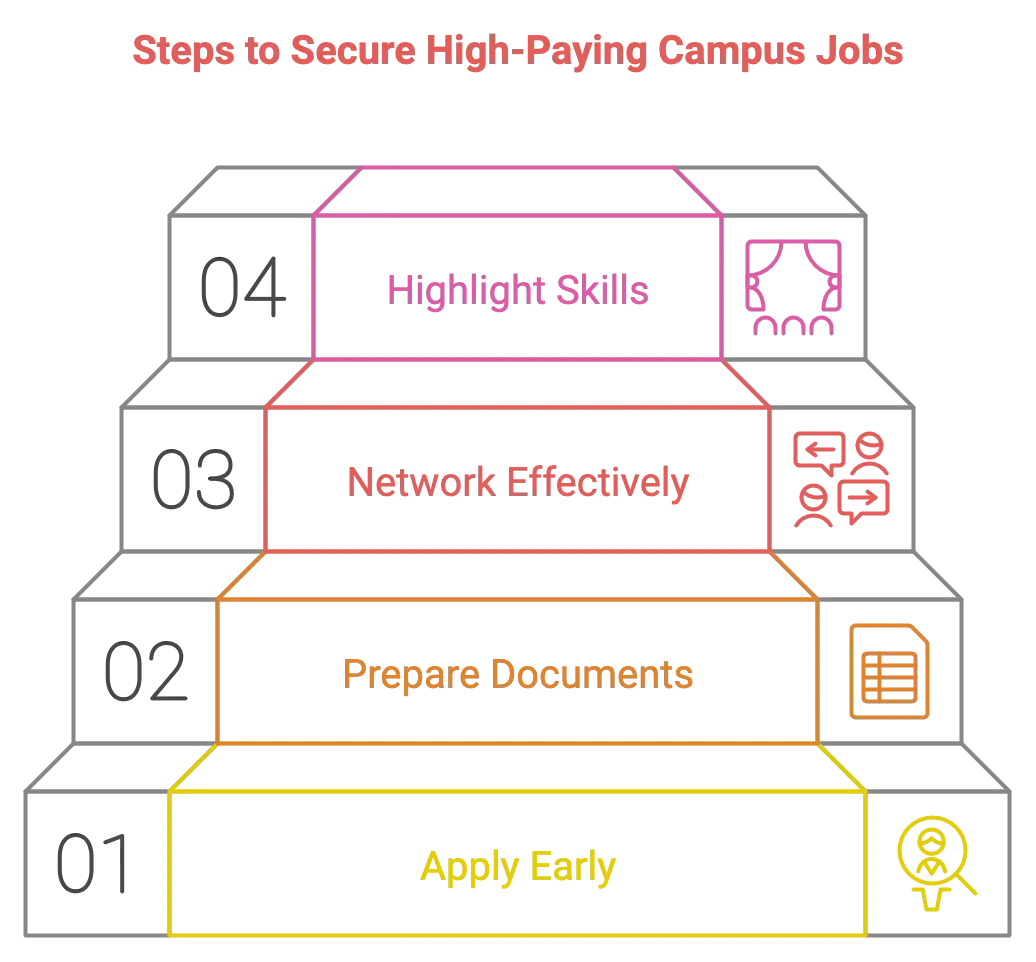
Ensure your resume, cover letter, and visa documentation are up-to-date. Connect with professors, join student organizations, and attend career fairs to expand your network. Highlight relevant skills such as language abilities, technical proficiencies, and academic achievements to stand out from the competition.
Following these strategies will increase your chances of securing well-paying campus jobs that align with your skills and career goals.
- Apply Early
- Start searching before the semester begins
- Check university job boards regularly
- Set up job alerts
- Prepare Your Documents
- Updated resume
- Cover letter
- Student visa documentation
- Social Security Number
- Network Effectively
- Connect with professors
- Join student organizations
- Attend career fairs
- Highlight Relevant Skills
- Language abilities
- Technical skills
- Previous work experience
- Academic achievements
Frequently Asked Questions
Conclusion
Finding well-paying part-time work as an international student in the USA requires understanding regulations, early preparation, and a strategic job search. We recommend focusing on on-campus opportunities at MMS Global Services first, as they typically offer competitive pay, valuable experience, and convenient locations.
Disclaimer: Pay rates are approximate and may vary by location and institution. Always verify current regulations and requirements with your university’s International Student Office.