
What is US Student Visa Social Media Screening?
US Student Visa Social Media Screening is a mandatory vetting process requiring F-1, M-1, and J-1 visa applicants to make their social media profiles publicly accessible for review by US consular officers. Implemented in June 2025, officers examine five years of online activity to assess security risks and verify application accuracy.
This means that every international student, vocational trainee, and exchange visitor applying for a U.S. student visa must now allow consular officers to review their online presence as a standard part of the visa screening process.
While the DS-160 visa application form has asked applicants to list their social media identifiers since 2019, the actual review of those accounts was inconsistent and often limited to cases flagged for additional security screening.
For international students, the implications are significant. Your digital footprint — every post, comment, like, share, and group membership across every platform you’ve used in the past five years — is now part of your visa application.
Key Facts About Social Media Screening:
- Applies to: All F-1, M-1, and J-1 visa applicants
- Started: June 2025
- What’s reviewed: 5 years of social media history
- Platforms: All major social networks (Facebook, Instagram, Twitter/X, TikTok, LinkedIn, etc.)
- Requirement: Profiles must be public
- Consequences: Denial if profiles are private or content is concerning
Who Must Undergo Social Media Screening?
The expanded social media screening policy applies to all applicants for F, M, and J nonimmigrant visas. This covers three distinct categories of international visitors to the United States, and no exceptions have been established based on country of origin, age, or academic level.
- F-1 visa applicants are students pursuing full-time academic programs at accredited U.S. colleges, universities, seminaries, conservatories, high schools, elementary schools, or other academic institutions, including language training programs.
- M-1 visa applicants are students enrolled in vocational or nonacademic programs, such as technical schools or other recognized nonacademic institutions.
- J-1 visa applicants are exchange visitors participating in approved programs that promote cultural exchange, including research scholars, professors, au pairs, camp counselors, interns, and students in work-and-travel or summer employment programs.
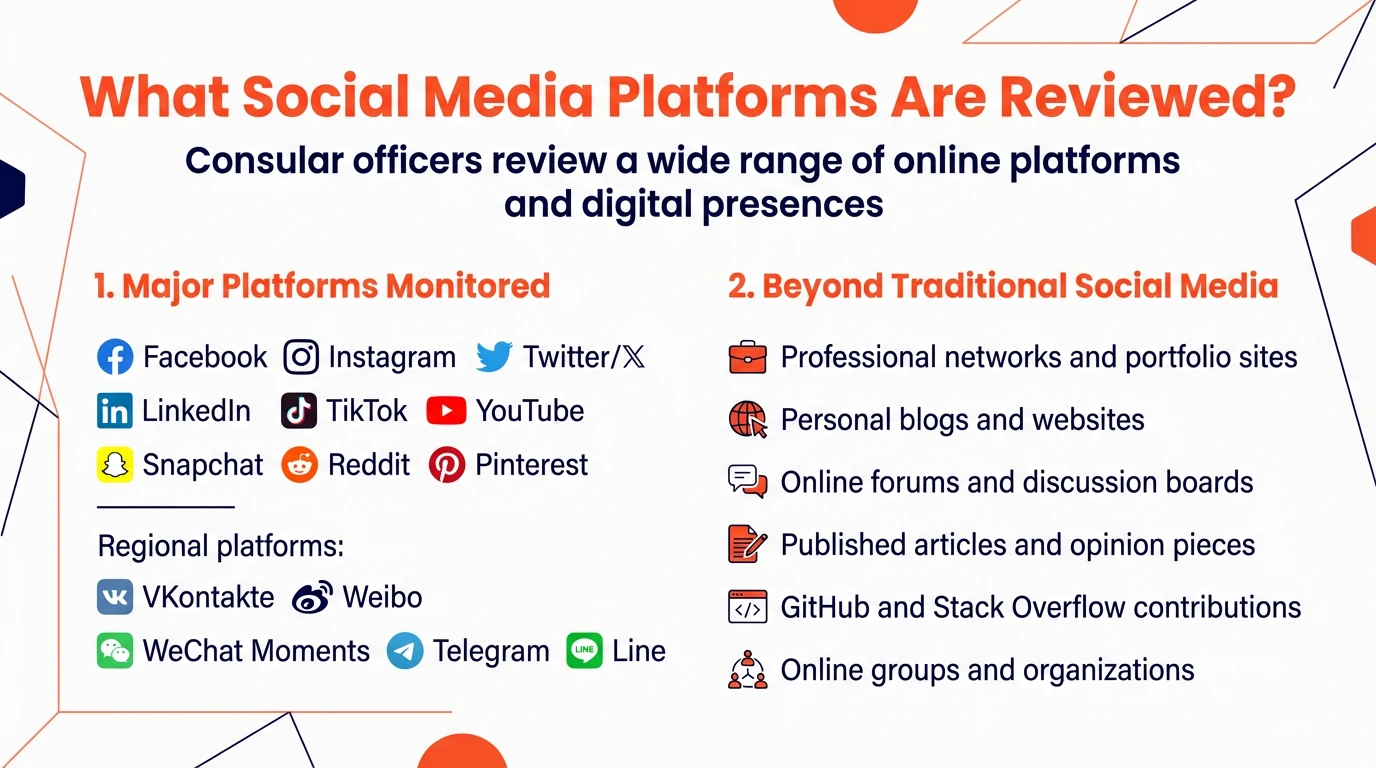
What Social Media Platforms Are Reviewed?
Consular officers are trained to review a wide range of online platforms and digital presences. Understanding the full scope of what’s examined will help you prepare more effectively.
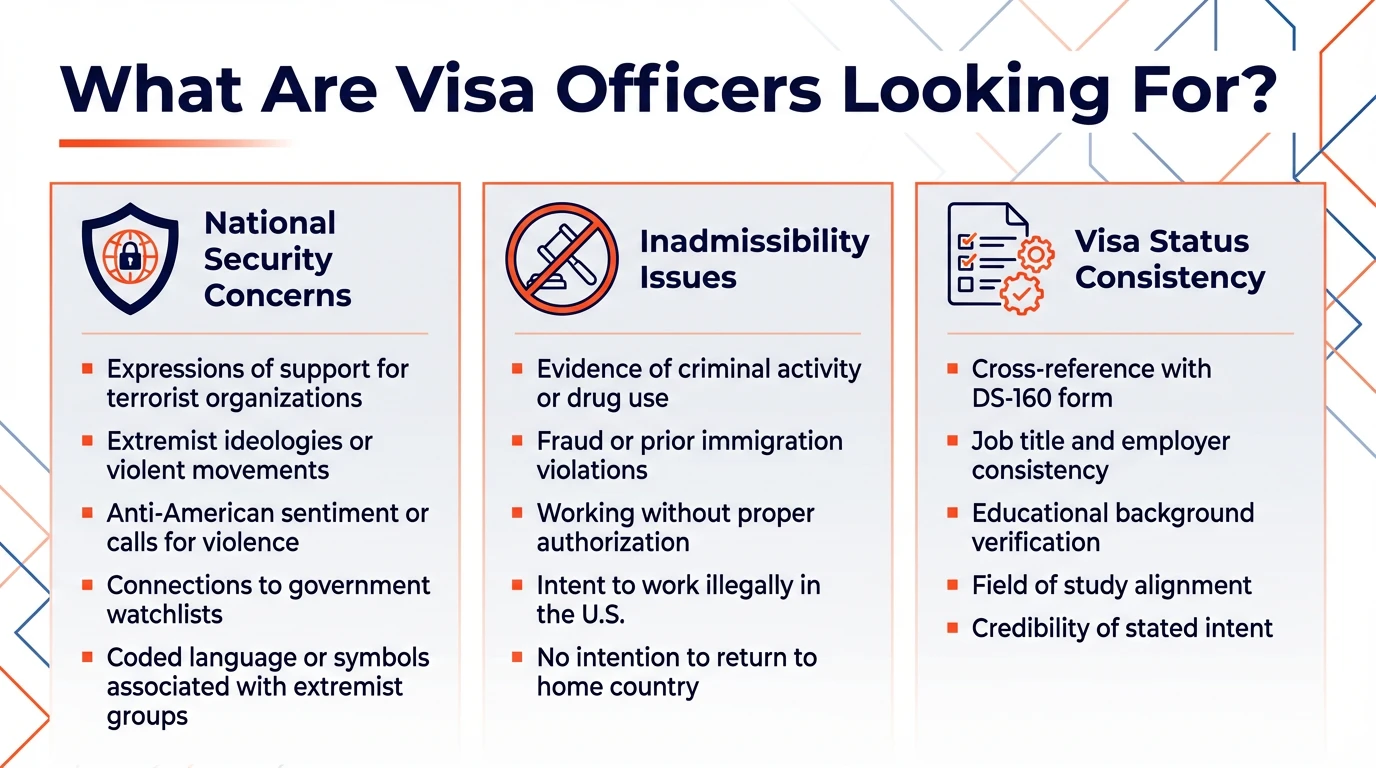
What Are Visa Officers Looking For?
Understanding the lens through which consular officers evaluate your social media content is essential to preparing effectively. The review isn’t designed to judge your personality or taste in memes – it’s a security and admissibility screening with specific objectives.
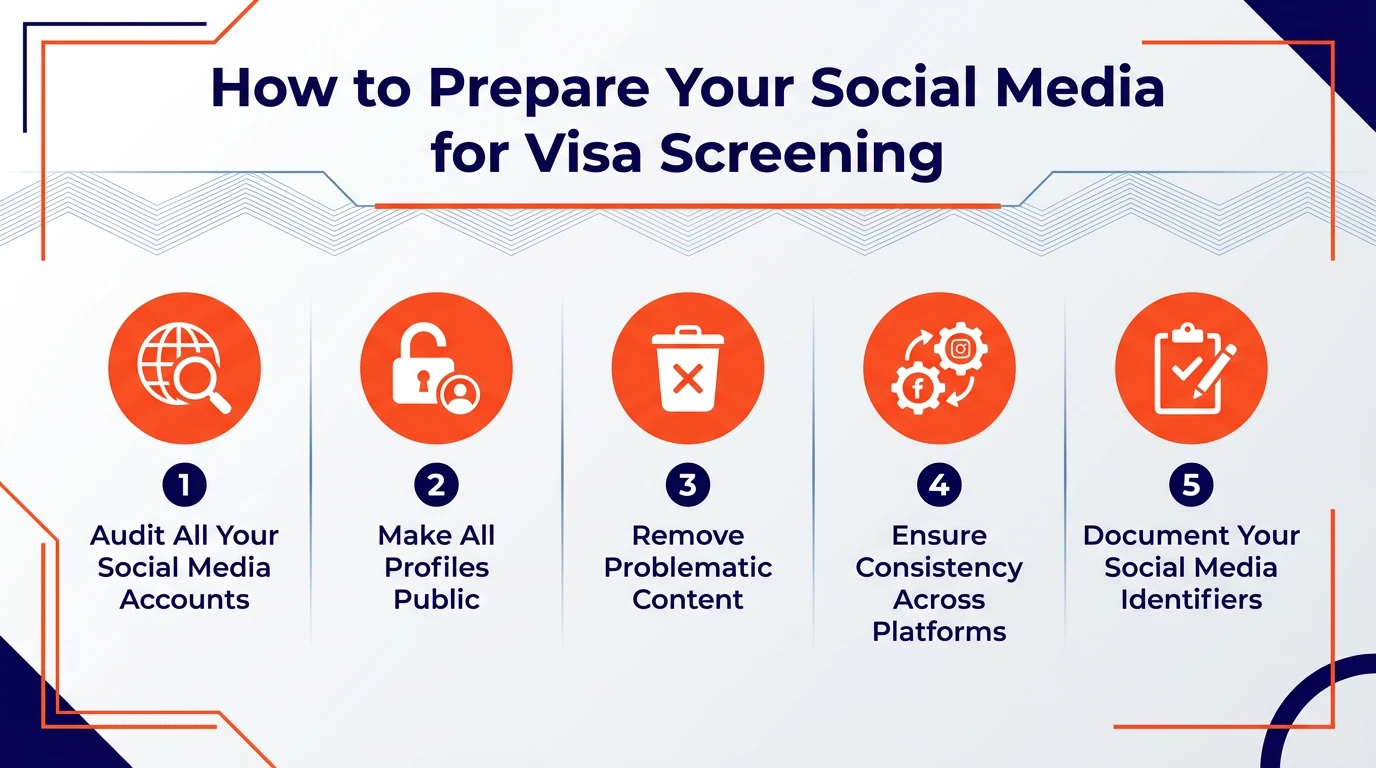
How to Prepare Your Social Media for Visa Screening
Preparation is the single most important factor in navigating the social media screening process successfully. The following step-by-step action plan will help you approach your application with confidence.
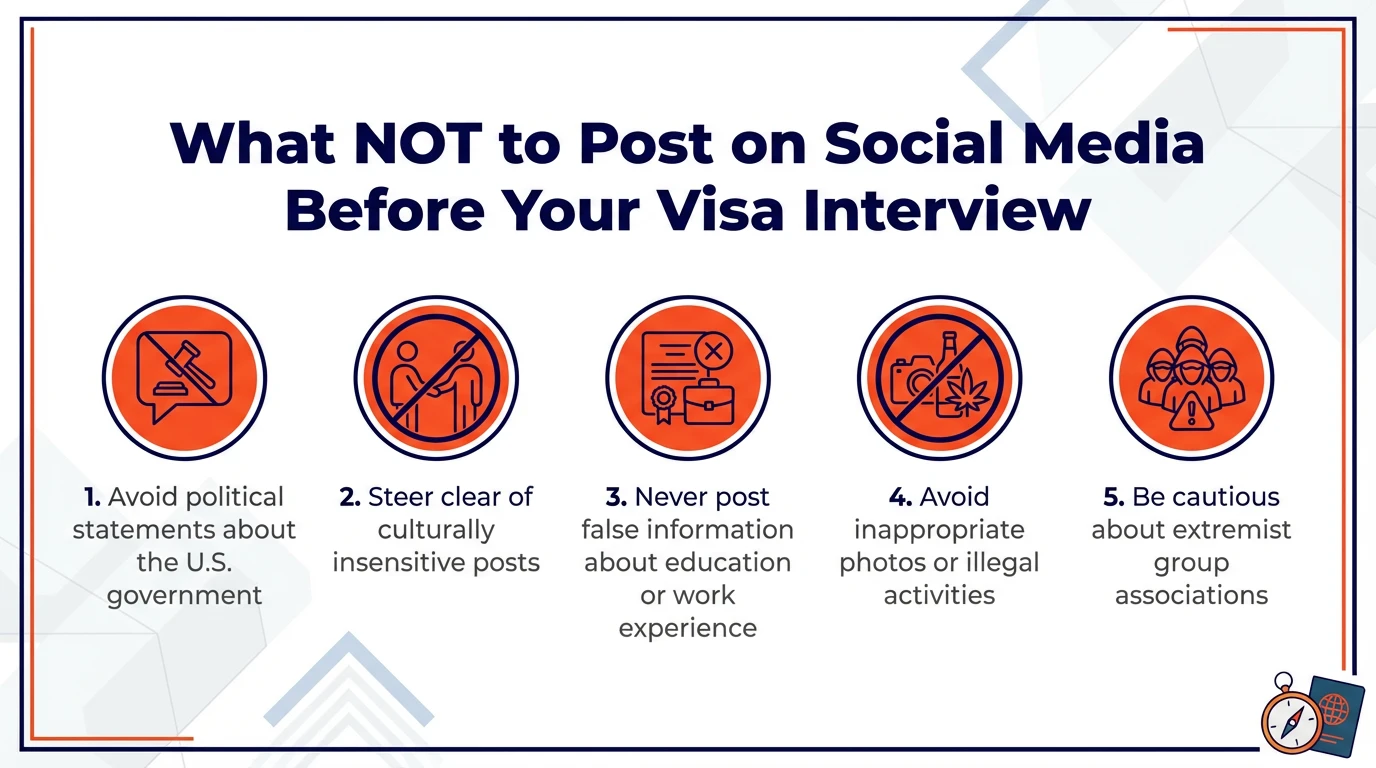
What NOT to Post on Social Media Before Your Visa Interview
In the months leading up to your visa application, be particularly mindful of what you share online. Certain types of content are more likely to trigger scrutiny or negatively impact your application.
Avoid making strong political statements about the United States, its government, or its policies.
Never post false or exaggerated information about your educational background, work experience, financial situation, or travel history.
Frequently Asked Questions (FAQ)
Resources and Next Steps
Taking action on the information in this guide starts with accessing the right official resources. Visit the U.S. Department of State’s Bureau of Consular Affairs website at travel.state.gov for the most current guidance on visa requirements and policy updates. The DS-160 Online Nonimmigrant Visa Application is available at ceac.state.gov/genniv, where you can create an account and begin your application.
To find the U.S. embassy or consulate in your country and schedule a visa interview, use the embassy locator at usembassy.gov. If you have questions about the social media screening policy specifically, the State Department’s announcement on expanded screening and vetting for visa applicants provides the official policy framework.
Preparing for Success with Social Media Screening
The US student visa social media screening process may feel invasive, but it is a navigable requirement when approached with preparation, honesty, and consistency. The applicants who succeed are those who take the process seriously, start early, and treat their digital presence as an extension of their visa application.
By auditing your accounts thoroughly, ensuring your online presence aligns with your application materials, and removing genuinely problematic content well in advance, you position yourself for the strongest possible outcome.
Your social media doesn’t need to be perfect — it needs to be authentic, consistent, and free of red flags.